

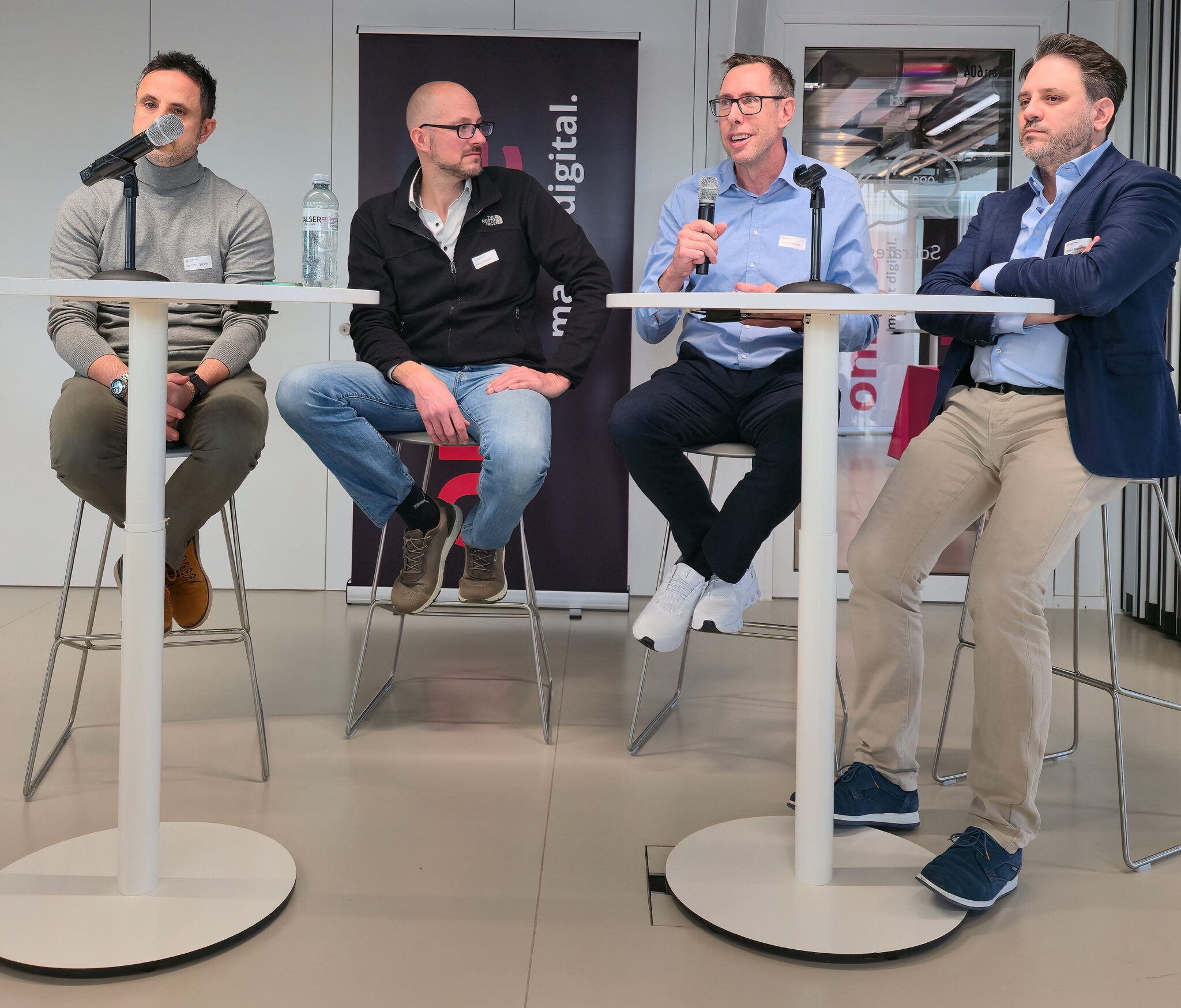
Why we as an online group were part of the discussion about low code and AI
The SWISS LOW CODE Café 2026 brought together experts from business, IT and research and impressively demonstrated the extent to which low code and artificial intelligence are currently evolving. For us as the Online Group, it was clear that we wanted to play an active role in this exchange. Our CTO Michael Kammerer represented our perspective on the podium and discussed the do’s and don’ts of low-code projects with other experts.
The event offered a balanced mix of keynote speeches, panel discussions, networking and supplementary workshops in a compact format. The focus was clearly on practical experience and open exchange, exactly where we also operate in our customer projects.
A coherent framework for well-founded discussions
After the welcome, the program started with an intro talk by Dr. Christoph Baumgarten (OST – LowCodeLab) and Prof. Dr. Philipp Ebel (IWI-HSG). They provided insights into smart apps, automation and the use of AI agents and showed how low-code platforms are developing technologically.
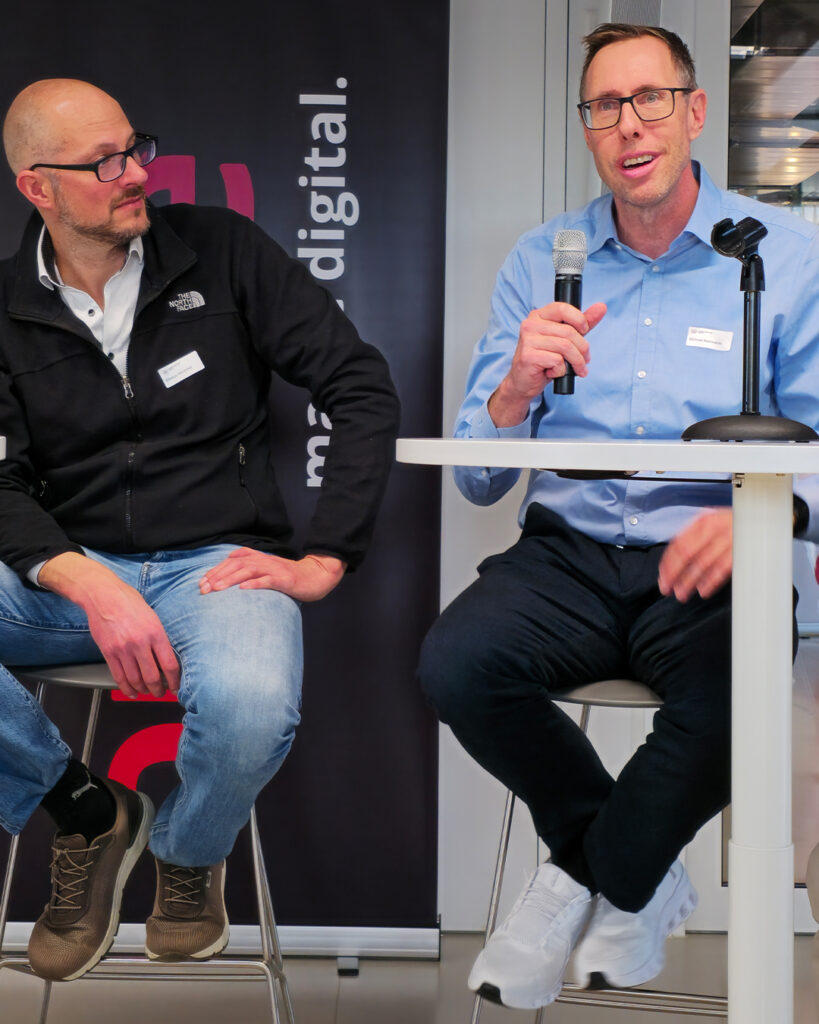
This was followed by a panel discussion on the do’s and don’ts in low-code projects, moderated by Christoph Baumgarten. Alongside Michael Kammerer, representatives from the Zühlke Group, isolutions and MuleSoft/Salesforce discussed typical misconceptions, success factors and the role of IT in low-code projects. One key finding was evident throughout the discussion: low-code projects remain IT projects.
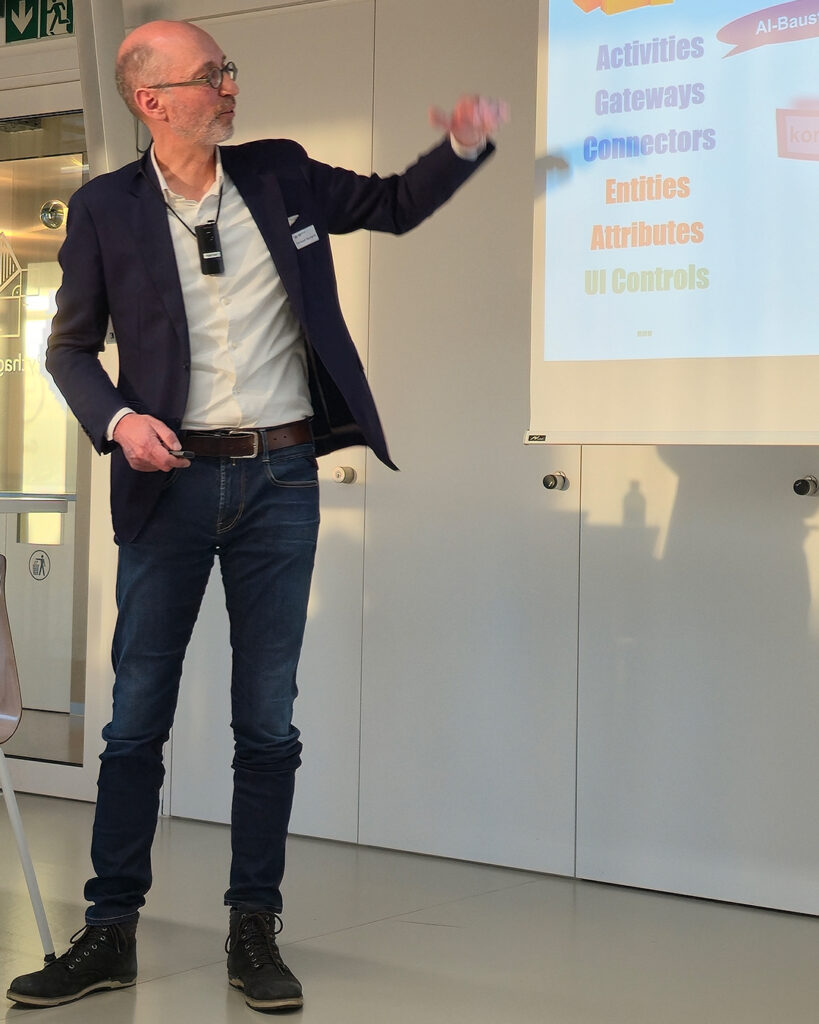
The program was complemented by an invited talk by Julian Reiser (Accelleron), who showed how Citizen Development can be promoted in a structured way without creating a new shadow IT. Networking over coffee and croissants as well as in-depth workshops rounded off the morning.
Low code does not equal “simple”
One of the most common assumptions that Michael Kammerer encounters in projects is that
low code is simple, so there is no longer any need for a classic software discipline. This is precisely where the mistake lies.
“Low code lowers the barrier to entry, but not the complexity.
It doesn’t make a bad process better, it just digitizes it faster.”
Michael Kammerer
CTO
This becomes particularly clear when comparing prototypes and productive solutions:
- A form for a few users can be created quickly.
- A company-wide application with offline functionality, complex authorizations in the data vault and connections to systems such as SAP is in a completely different league.
Such solutions still require clean architecture, clear responsibilities and technical engineering. Governance is not a brake, but a necessary guardrail. Without clear rules, a new form of shadow IT will quickly emerge, even in the low-code environment.
AI in low-code projects – conscious use instead of blind trust
Another focus of the discussion was the use of AI within low-code platforms. Michael Kammerer made a clear distinction between two levels.
AI in the development phase
Copilot functions significantly accelerate the creation of applications. However, the long-term perspective is crucial:
- Is the solution maintainable?
- Can the team continue to understand and expand the logic in the future?
- Are governance and security guidelines adhered to?
“AI is a powerful assistant, but not an architect.
Responsibility for quality, governance and sustainability always remains with people.”
Michael Kammerer
CTO
AI as part of the application
As soon as AI works productively with company data, the priorities shift:
- Data quality is becoming a critical success factor.
- Results must be verifiable and testable.
- Transparency, control and sovereignty are coming to the fore.
For Swiss companies in particular, the question of where data is processed and how telemetry and company data remain protected is key. Our approach at the Online Group is clear: AI is used in a targeted manner and sensibly integrated into existing workflows.
Looking ahead: from low code to vibe coding
Looking into the future, it became clear that low code is on the verge of another development step. One term that is being used more and more frequently is vibe coding.
Instead of assembling applications manually, in future we will describe the intention, logic and goal of a solution. The platform generates the result in real time. Providers and platforms are already showing us where the journey is heading.
This brings enormous speed and opens up new opportunities for digitalization. At the same time, the foundation remains crucial. AI-generated solutions also need professional environments, clear governance, security and scalability.
The role of IT is shifting noticeably. Less focus on technical construction, more responsibility for business logic, quality and sustainability. This is precisely where we see our strength as an online group.
Exchange at eye level – even off the stage
In addition to the official program items, the SWISS LOW CODE Café 2026 offered plenty of space for personal exchange. Our experts Michael Kammerer, Mikayil Bekooglu and Marco Denzler were available for talks, questions and discussions after the podium.
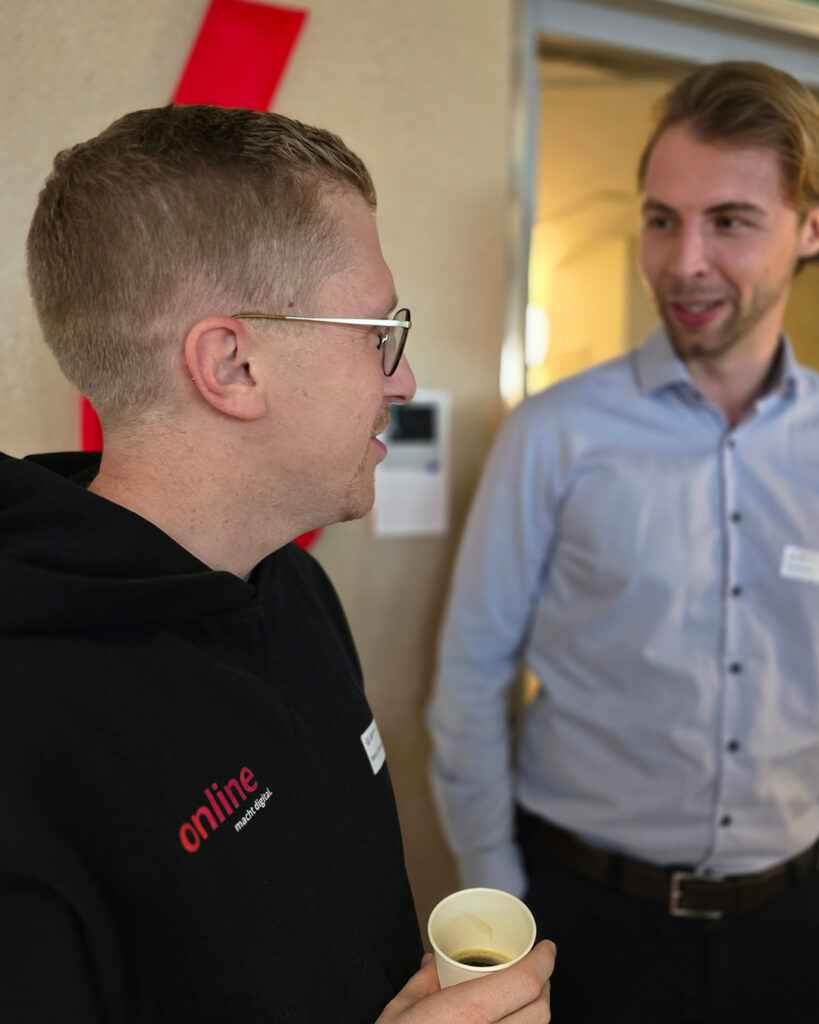
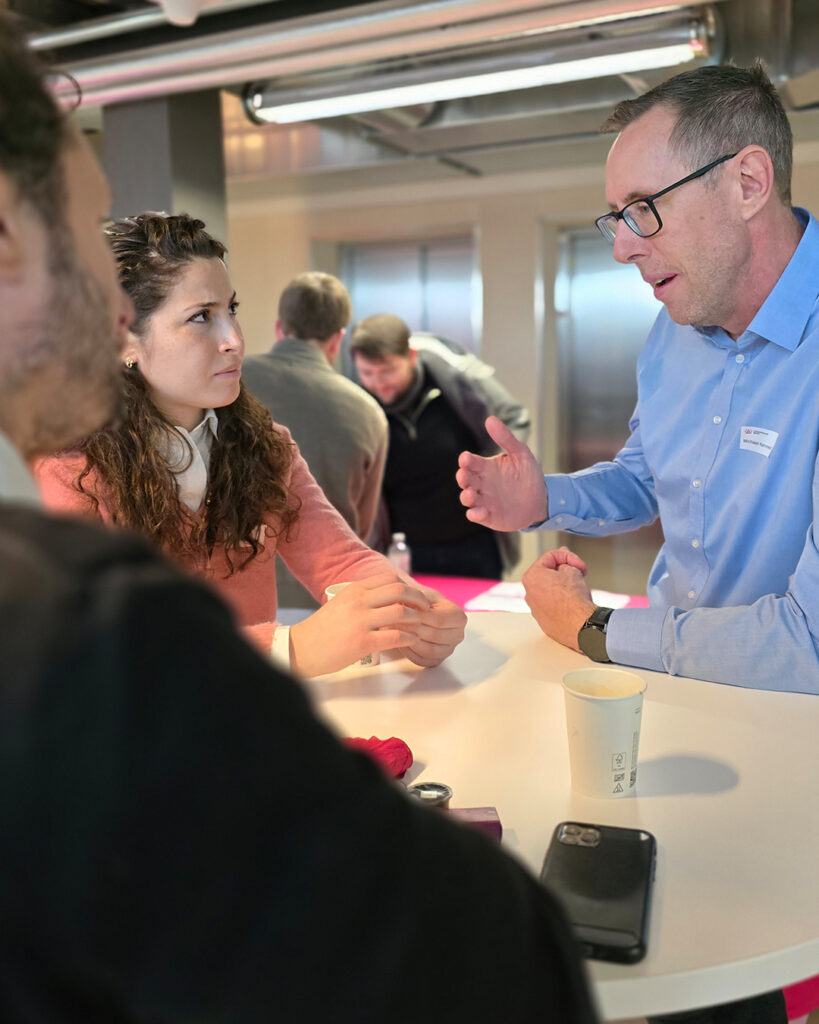
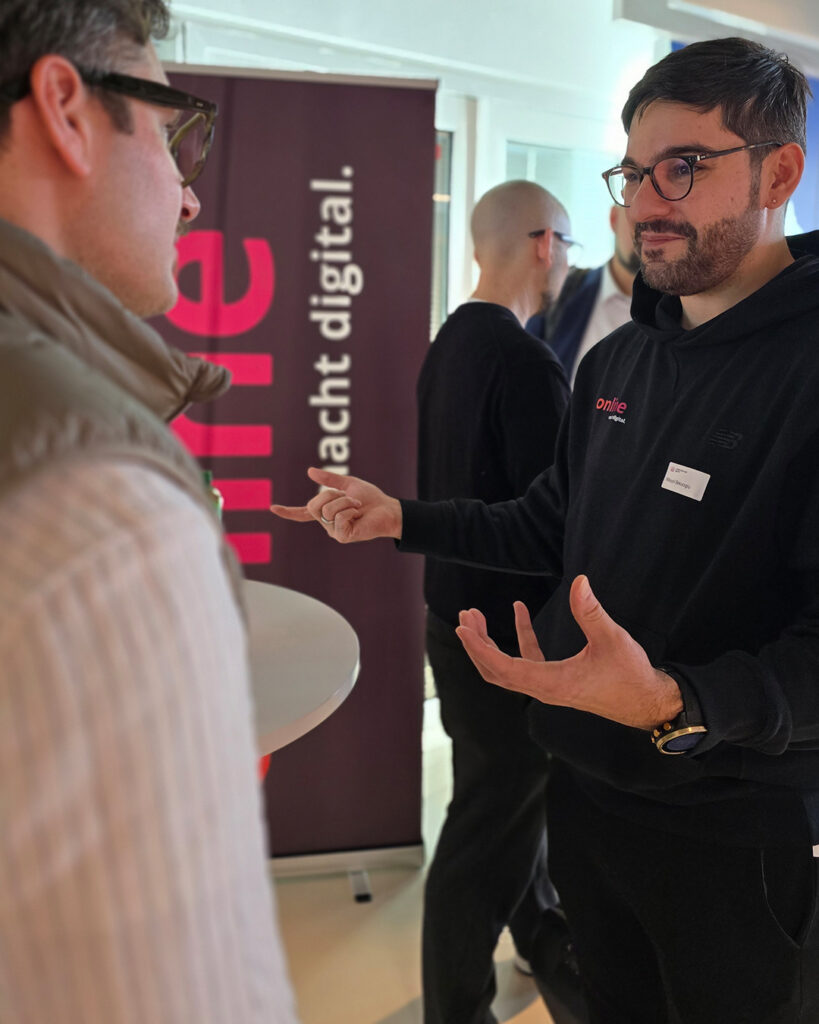
The direct dialog with the community, universities and partners shows us time and again how important such formats are. Digitalization arises where experience, technology and practice come together. We look forward to further exchanges – practical, honest and with substance.
Do you want to delve deeper into the topics of low code, no code, pro code and vibe coding?
Our next webinar will deal with precisely this topic, all about the new trend of vibe coding.
You can register directly for the webinar here!