

How can companies use AI where it provides the greatest benefit in day-to-day operations?
Categorizing customer inquiries, processing damage reports, or marketing real estate: Property management involves numerous processes with manual steps. AI opens up new possibilities for simplifying and automating these workflows. But which applications are worth the investment? Where are stable business systems still needed? And how can new solutions be safely implemented within the company?
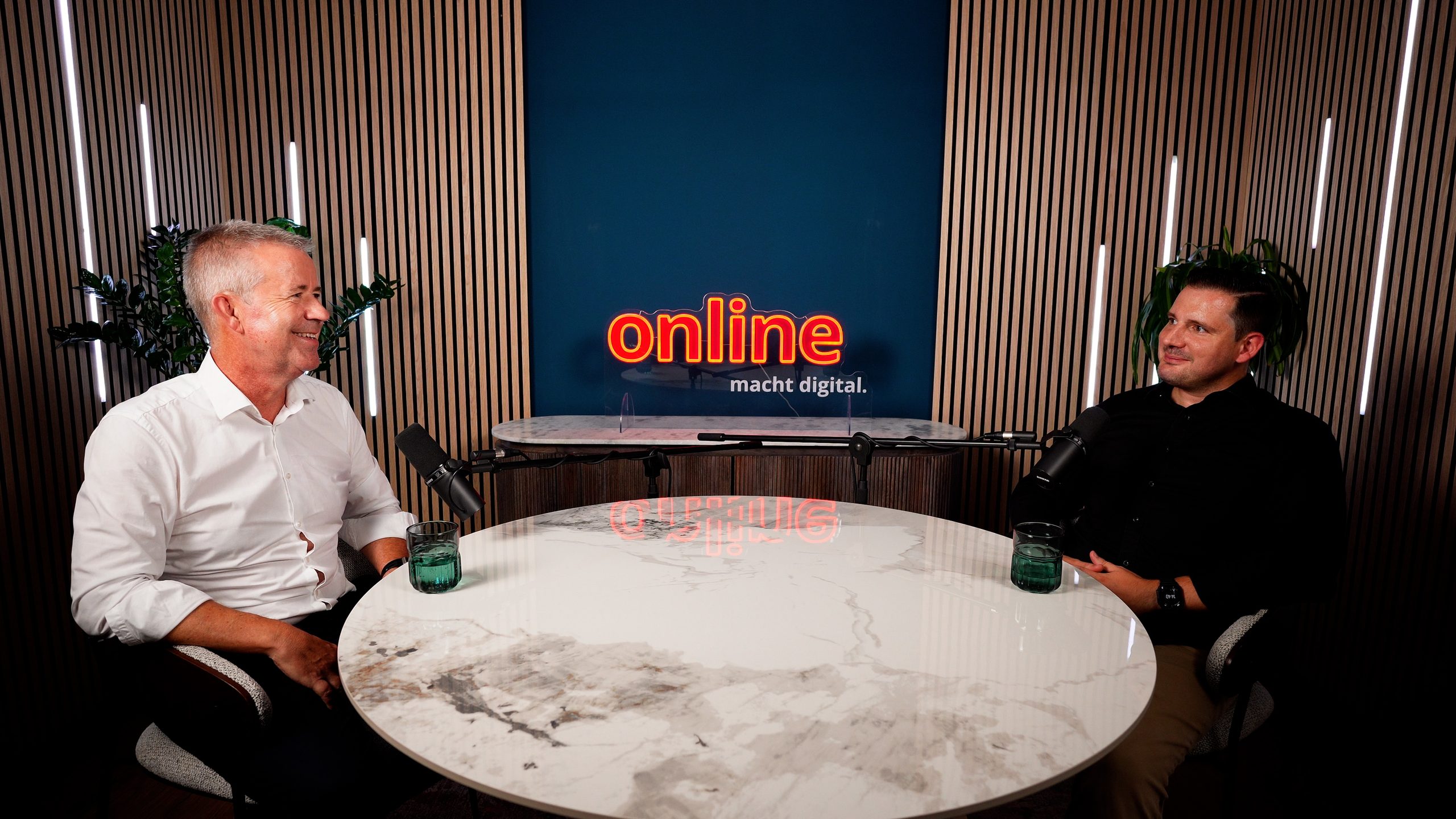
In the eighth episode of “shift – Das Signal im Rauschen”, Balz Zürrer speaks with Matthieu Theurillat, Head of Digital Business (CIO) at Livit, about AI and automation in the real estate industry. They discuss specific applications in customer service, the potential of digital twins, software development with AI, and the importance of governance. His approach: start with manageable tasks, consider the benefits across the entire company, and lay the groundwork early for future scaling.
From Software Development to Digital Business Transformation
Matthieu Theurillat has been involved with technology since completing his training as a computer scientist. As a former software developer, he has firsthand experience with technical implementation. His career path took him from IT leadership roles at SecurePost and Loomis to the Office World Group, where he served as CIO and a member of the executive board.
Since August 2025, he has been Head of Digital Business (CIO) at Livit and a member of the IT Management Committee at Swiss Life Asset Managers.
He is passionate about systems that function reliably in everyday life and make work easier. In conversation, he compares his role to the work that goes on behind the scenes at a theater: integrating systems, enabling processes, and ensuring that everything works together seamlessly.
His personal AI moment: an app for sewing patterns
Theurillat experienced just how much AI is transforming software development during a personal project.
His wife was looking for a better way to manage her digital sewing patterns. These were scattered across various platforms, one of which no longer existed. For him, this was a concrete reason to try his hand at AI development.
He already had the technical knowledge. What he lacked, alongside his job and family, was the time to program an application entirely on his own.
With AI, however, he was able to bring the project to life. He took on the role of software architect and coordinated the development, while AI handled a large portion of the programming work. Within a few weeks, the application schnittwerk.app was created.
The experience changed his perspective on the possibilities for businesses. If a customized solution can be developed with limited time and effort, tailor-made applications and process automation also become more economically viable.
How Livit Is Already Using AI in Everyday Operations
At Livit, the benefits of AI are evident, among other things, in the handling of incoming customer inquiries.
Inquiries must be reviewed, categorized, and assessed for urgency. AI helps identify the content and alerts employees to cases that require special attention. For example, an urgent damage report can be identified more quickly.
Another example is the Livio chatbot. It answers general questions based on the FAQs and Livit’s existing knowledge base. These include questions about subletting or keeping pets, for example.
This provides an additional channel for obtaining such information, which is also available outside of office hours.
Theurillat describes these applications as first steps. They already demonstrate how existing processes can be specifically improved with AI.
Standard Processes as a Major Lever
For future development, Theurillat sees particular potential in recurring standard processes.
The focus is on tasks that still require a great deal of manual work today. One example is the claims process: Before a technician can take on a job, information about the affected device, its serial number, and the specific defect often has to be gathered.
If this information is collected and shared in a structured manner early on, the technician can better prepare for the job and bring the appropriate replacement parts. This helps reduce follow-up questions and delays.
Theurillat also sees opportunities in the marketing of residential and commercial properties. This includes creating appropriate content and determining which target audiences should be reached through which channels.
For him, it’s crucial to take a close look at such processes and identify the steps where automation makes a tangible difference.
Digital Twins and Predictive Maintenance
Another area with great potential is digital twins of real estate.
When information about buildings, installed equipment, and sensor and consumption data is consolidated, it creates a better foundation for proactive decision-making.
Instead of simply reacting to a malfunction, maintenance work could be planned in a more targeted manner. For example, if data shows that certain heating models repeatedly cause problems after a certain period of time, maintenance can be adjusted accordingly.
Other systems may require less attention. With an appropriate database, resources could be allocated where they provide the greatest benefit.
Theurillat sees this as an opportunity for more efficient management, more reliable systems, and lower costs. In the interview, he describes this field as an important step forward for the real estate industry.
Developing In-House Software—on a Stable Foundation
Experiences with AI-powered software development also raise a new question for companies: Which applications should be purchased, and which ones can be developed in-house in the future?
Theurillat sees opportunities in solutions that are precisely tailored to a specific use case. Where comprehensive off-the-shelf software would have been purchased in the past, a smaller in-house development might suffice in the future.
Existing ERP and CRM systems remain important. They form a stable foundation and contain key business data. Additional applications can build on this foundation to support specific tasks more quickly and flexibly.
At the same time, AI lowers the barrier to entry for developing in-house software. Employees can create small applications to make their work easier.
This also presents challenges. As soon as such solutions are made public or process sensitive data, questions arise regarding architecture, operations, and data protection. At Livit, clear guidelines are therefore in place to help leverage these opportunities while limiting uncontrolled shadow IT.
Governance creates the conditions for scaling
For Theurillat, governance and legal issues should be addressed at the very beginning of a project.
Those who develop a solution first and only address these issues before widespread implementation risk having to do time-consuming rework. A lack of precautions can make scaling difficult or jeopardize ongoing operations.
During the interview, he explains that Livit evaluates AI use cases based on the EU AI Act and derives appropriate measures from this assessment. Depending on the application, additional security requirements or human oversight steps may be necessary, for example.
This effort is intended to provide clarity early on. Once the key questions have been answered and the necessary measures implemented, a solid foundation is established for further expansion.
For Theurillat, governance is thus an integral part of successful implementation: it helps design applications from the outset so that they can grow reliably later on.
Setting Priorities Together with the Business
For Theurillat, deciding which processes to tackle first is a joint effort involving IT, executive management, and line of business departments.
Financial and human resources are limited. That is why a conscious decision is needed about where investments will create the greatest value.
Ideas from individual employees can lead to valuable improvements. For the company as a whole, however, the greatest opportunities for impact may lie elsewhere.
In discussions with the CEO and executive management, the goal is therefore to identify these opportunities, set priorities, and pool resources. The business units contribute their process expertise, while IT provides support for technical implementation.
This helps prevent a proliferation of individual initiatives while ensuring that particularly impactful projects do not receive insufficient attention.
Start with manageable tasks
What advice does Theurillat offer to other decision-makers?
To delve deeply into AI themselves, seek out appropriate support, and start with concrete, manageable tasks.
The search for that one big project can lead to overlooking obvious improvements. Simple processes with a high manual workload often provide a good starting point.
Those who start there can gain experience, free up capacity, and plan the next steps on a solid foundation. The key is to consistently follow through on the selected initiatives.
Listen to the eighth episode of “shift” now
The interview with Matthieu Theurillat highlights the wide range of applications for AI in real estate management. These range from categorizing customer inquiries to automated claims processing and the development of proprietary applications.
One central idea runs throughout the episode: Successful AI implementation requires specific tasks, clear priorities, and a reliable foundation. Those who start small and address governance early on lay a solid foundation for future expansion.
In the eighth episode of “shift – Das Signal im Rauschen”, Balz Zürrer and Matthieu Theurillat discuss what this path might look like in practice.
The eighth episode of “shift – The Signal in the Noise” is now available on Spotify and YouTube.