


How Can AI Be Turned Into Real Business Value?
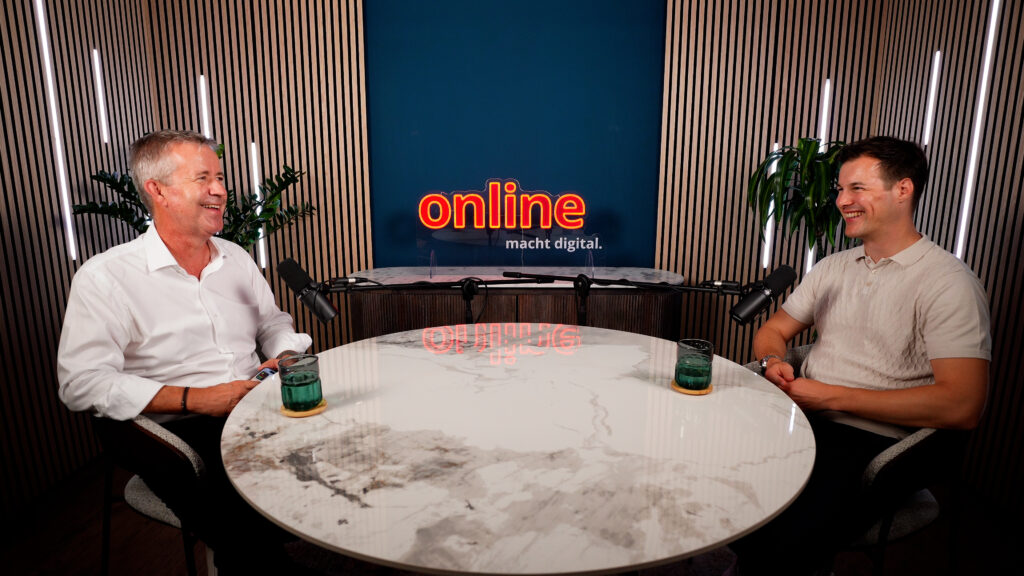
New AI models, tools, and use cases are emerging almost daily. But which of them actually help a company move forward? And how can you prevent a passion for innovation from turning into a chaotic “technology zoo”? In the fourth episode of “shift – Das Signal im Rauschen,” Balz Zürrer speaks with Daniel Fiechter, CIO and Managing Director at Vitra, about pragmatic digitalization, clear AI strategies, and how leadership is changing as humans and AI work together.
Technology as a Lever for Business
Daniel Fiechter operates at the intersection of business leadership, technology, and customer experience. As CIO and Managing Director at Vitra, he is responsible for the company’s technological transformation and operational excellence.
Previously, he served as Group CIO and a member of the Executive Board at STOBAG, where he oversaw the digital transformation of a traditional industrial company. His entrepreneurial roots as the founder of taktwerk GmbH continue to shape his perspective on technology to this day: What matters most is not the latest tool, but the concrete business benefit.
At Vitra, too, Daniel Fiechter does not view IT as merely system administration. Technology should improve business processes, support strategy, and be deployed where it makes a real difference for the company. In our conversation, he sums it up with one key idea: IT and business are becoming increasingly inseparable.
AI Needs Focus, Not Technology Hype
Following the emergence of ChatGPT, Vitra was quick to establish an internal AI task force. Employees from various departments were able to experiment and identify potential applications. This resulted in more than 100 use cases.
However, the sheer number of ideas also presented a challenge: Similar use cases were sometimes being pursued in different departments, with different partners, and using different technology stacks. It was therefore clear to Daniel Fiechter that a greater focus and a common strategy were needed.
Today, Vitra is deliberately focusing on areas where AI can deliver tangible added value. The primary focus is on improving efficiency, sales support, and the management of product knowledge.
However, the discussion does not begin with the question of which AI model or agent should be used. First, it must be clear exactly which problem needs to be solved.
Not every challenge calls for AI. Especially in existing processes, traditional automation may still be the more sensible solution. Only once processes, data, and desired outcomes are understood can one assess which technology will actually make a difference.
Rethink processes instead of just adding new tools
For Daniel Fiechter, a key strategy is not simply to use AI to make existing processes a little faster. Rather, companies should ask themselves how a process could be fundamentally redesigned using today’s technological capabilities.
After all, if you simply add another specialized tool for every problem, you’ll end up with a “technology zoo” over time: many individual applications, increased complexity, and additional costs—without a corresponding increase in business value.
Vitra therefore takes a platform-based approach and relies on the Microsoft platform for its AI initiatives. Documents and knowledge are already stored in Microsoft 365, SharePoint, and Teams. This allows the company to focus more on the actual problems and use cases, rather than having to decide on specific technologies and models anew for each use case.
The platform concept is intended to help centralize access to knowledge and build new solutions on a shared foundation.
People need to help shape the change
In addition to technology and processes, adoption also plays a crucial role. At Vitra, there are about 40 to 50 AI enthusiasts from various departments who are trying out new possibilities and sharing their knowledge throughout the organization.
This bottom-up approach is complemented by accessible training sessions and regular forums for exchange. For example, employees can use Copilot Chat to share their experiences with text, image, and video generation, as well as other AI applications.
At the same time, experimentation alone is not enough. According to Daniel Fiechter, as soon as processes are to be fundamentally changed, clear decisions—and, in some cases, a top-down approach—are also needed. It’s not just a matter of gradually improving existing processes, but of fundamentally rethinking them in light of new possibilities.
Leadership Between People and AI
With AI agents, the way work is organized and managed in the future is also changing. For Daniel Fiechter, a key skill for leaders will be the ability to distinguish between tasks that can be performed autonomously and those that still require human involvement.
Well-defined processes with clear outcomes can increasingly be automated. However, when it comes to complex decisions, critical situations, or situations that require context, experience, and tact, humans remain indispensable.
This may also change our understanding of leadership. In the future, what will matter most is not so much how many employees someone leads, but rather the results achieved—regardless of whether individual tasks are performed by people or agents.
“I think it’s becoming increasingly important to distinguish between what really requires human decision-making and what I can let run autonomously.”
Daniel Fiechter
CIO & Managing Director | Vitra
Willingness to adapt is becoming a crucial skill
Technological development is constantly accelerating. It is difficult to predict with any reliability exactly what skills will be needed in five or ten years.
This makes the ability to adapt to new situations and apply existing skills to new tasks all the more important for Daniel Fiechter. A willingness to embrace change and the ability to adapt are thus becoming key skills in a workplace that is constantly evolving due to AI.
He is convinced, however, that work will not simply disappear. Rather, roles and tasks will change—much as they have during previous technological upheavals.
Listen to the fourth episode of “shift” now
The conversation with Daniel Fiechter offers a deliberately pragmatic perspective on AI and digital transformation. It addresses the question of how companies can develop a clear focus from a multitude of ideas, why business value should take precedence over technology, and why processes must be fundamentally reimagined in light of these new possibilities.
In addition, Balz Zürrer and Daniel Fiechter discuss how to get employees on board with change and what roles people and AI agents will play in companies in the future.
The fourth episode of “shift – Das Signal im Rauschen” is now available on Spotify and YouTube.